Philosophical study of life, death, and nature
Philosophical study of life, death, and nature
|
   |
|
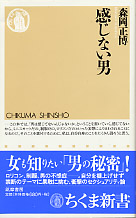
A book on men's sexuality, especially men's sexual frigidity, their rejection of their own bodies, and their attraction to young girls in their early teens and school uniforms. This book has provoked a variety of emotional reactions from readers, scholars, and the mass media. One of the most important books in Japanese men's studies. Chapter 1 Chapter 2 Chapter 3 Chapter 4 Chapter 5 Afterword – 2004 Epilogue Afterword – 2017 In this book I talk a lot about my own personal sexuality because it is almost useless to talk about men's sexuality in a "general" way. As a "professor" it was difficult for me to write about my own sexuality, but I did it anyway and I was able to present some unique analyses of why this kind of sexuality has been constructed within me. This is both a book of confession and a deep philosophical analysis. I don't want to write about the contents of this book in detail here. I assume you will be able to imagine them from the table of contents below. The main topics are (1) the analysis of men's sexual frigidity, and (2) the analysis of why many men have a (sub-conscious) attraction toward young girls around the age of 12 or so, especially those girls who wear school uniforms (in Japan we call it "rorikon (lolicon)" (abbreviation of "lolita complex") or "uniform fetishism". (Evidence of this can be seen in Japanese animation or “anime”). Readers should note that the term "male frigidity" is used in this book with a completely different sense from that found in sex therapy. In this book, "male frigidity" means a mental, existential state after ejaculation, which may deeply influence men's sexuality and their relationship with women. As for rorikon, Japanese feminists have asserted that men who cannot have a sexual relationship with adult women sometimes seek to sexually exploit young girls because they are weak and cannot usually say no to adult men. I think this theory explains one aspect of rorikon, but it does not explain everything about this phenomenon. I present a unique and provocative hypothesis, the idea of a "desire for the rebirth of oneself" in Chapters 3 and 4. In the last chapter, I point out that there exists the idea that "my body is dirty" inside many men's minds, and this idea might be another cause of men's insensitivity in the domain of sexuality. I then consider how best to escape from this miserable state. A gay man who had read this book told me that it is very rare for a heterosexual man to talk about his own sexuality in such an open manner, and he went on to say this might well become a revolutionary work. I was happy to hear this. A woman also told me that she was shocked to know the hidden reality of male sexuality. After publication, this book provoked a variety of emotional reactions from readers, particularly regarding my interpretation of men's frigidity after ejaculation and the psychological roots of the Lolita complex and uniform fetishism. The most shocking part of this book was the description of the latter. Japanese feminists have slowly begun to refer to this work in their writings. This book is now considered a seminal text in Japanese men's studies. Japan is notorious for its mass production of child pornography. This book needs to acquire a wider audience in this sense. This book was translated by Robert Chapeskie. (The previous tentative English title of this book was "The Insensitive Man.") Book Reviews Chizuko Ueno, University of Tokyo - "So far we have rarely witnessed a man confessing his hidden sexuality publicly. Finally, a book that answers my questions has been published." (Shukan Gendai Magazine, April 2, 2005) Toshiki Sato, University of Tokyo - "The first-person narrative of the author is more logical and sincere than those theories which hasten to explain sexuality in terms of biological desire or social power. This book is worth reading for this alone." (Yomiuri Shimbun Newspaper, March 20, 2005) Book reviews also appeared in the Asahi, Tokyo, and Sankei Newspapers, Kyodo Tsushin, Shukan Asahi Magazine, and other publications. Publication Data Chikuma Shobo Publications, Chikuma-Shinsho series No.521, Tokyo, Feb.9,2005, 181 pages, 680 yen, written in Japanese. The complete edition (with Epilogue added) was published in the Chikuma-Bunko series on April 10, 2013. Japanese website for this book
Translation into Other Languages A Korean translation was published on October 1, 2005, by Random House JongAng, Korea (out of print). A Korean translation of the complete edition (2013) was published by PlanetB, Korea, on November 27, 2017.
|